

Does quantum biology still matter in 2026? Research update
From chemical science to subatomic understanding in hydrogen bonds, DNA, and technology - research update for 2026


What I find most exciting about getting below the chemical scale into the quantum scale are the implications for the future of health and healthcare.
As we move into a new scientific paradigm that better describes energy flow—fundamental to how all life functions—we better understand the potentiation of either health or disease states.
Let’s choose health!
What is the quantum scale in biology?
What if we could find out even more about how the Schumann Resonances (SRs) from the Earth (and either exposure or isolation from them) affect us by getting down to the subatomic level1?
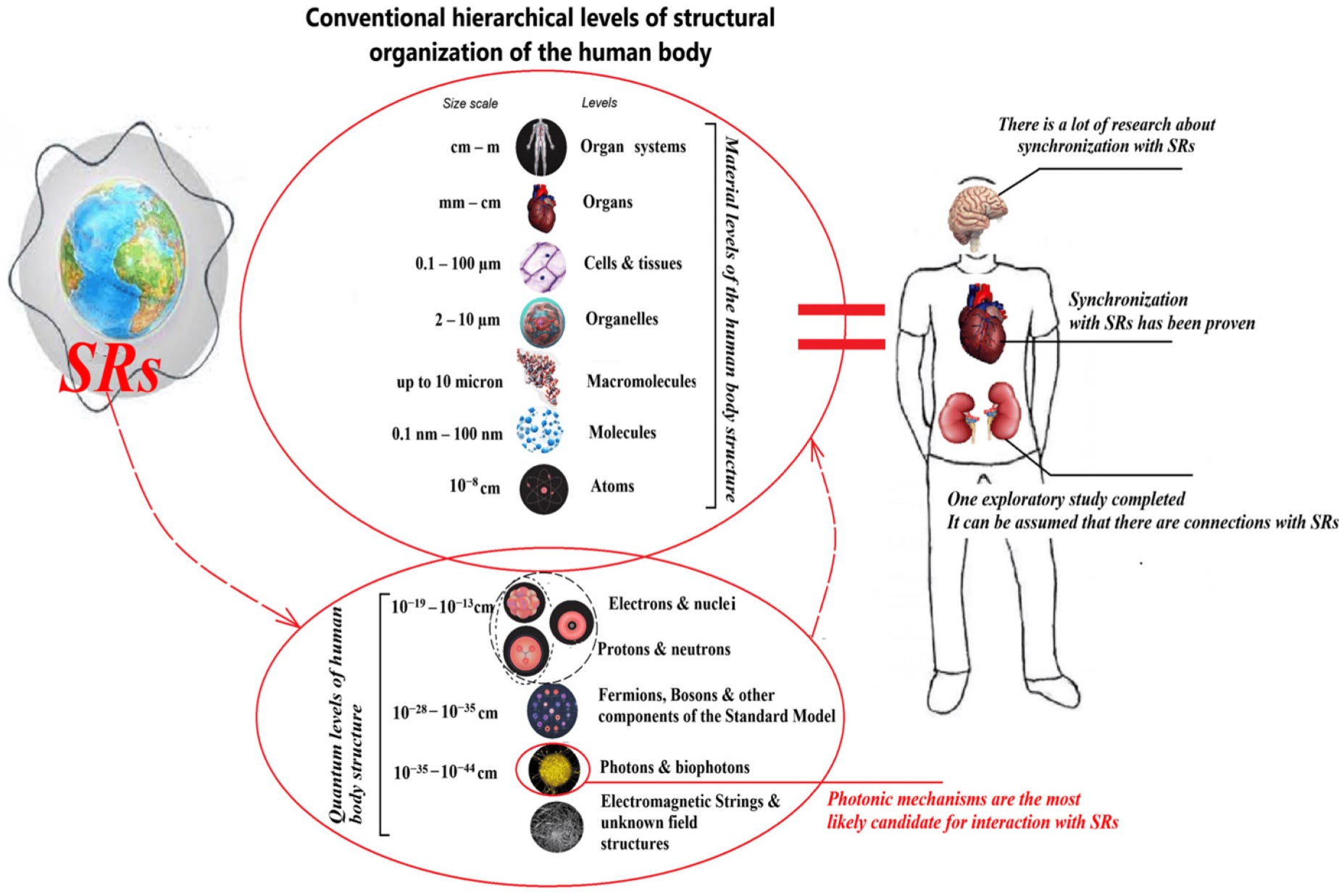
Is DNA actually quantum?
Yes, DNA is necessarily operating at a quantum scale (I’ll explain how later in this article). The environmental impacts on the beautiful butterfly-shaped thyroid are now understood to be driving multigenerational epigenetic changes2, suggesting quantum factors we are just beginning to understand may actually be driving multi-generational impacts3!
This tells us that we can make a big difference for future generations... but what about for us, now?
When it comes to diagnosis of disease, many are beginning to predict a new era of quantum medicine that promises the potential for earlier diagnosis, and thus, earlier treatment4.
Quantum physics is a promising field that intersects with medicine much more than originally understood. In terms of diagnosing different diseases, incorporating quantum mechanics into the study of medicine can allow for efficient diagnosis before symptoms even arise in a patient. Applying theory-based mathematical structures that describe neuron transmission throughout the brain and mind on a quantum scale can help us to better understand neurological diseases in patients. Quantum theory can even give plausible explanations for subtle DNA changes and even telomere reduction in patients who develop cancer. Utilizing quantum theory in the field of medicine can help in understanding and applying treatments for a multitude of different diseases, such as Alzheimer’s disease or diverse types of cancer, and even expand upon efficient and reliable diagnosis in clinical settings.
Bisiani et al (2023)
Too small to matter, or just too small to measure?
For a long time, there was a general consensus that quantum effects are too small to matter in biology, and that any quantum effects happening atomically are essentially washed out by the time everything is scaled up to the tissue level.
That premise is currently being undone as another one of the most fundamental aspects of biochemistry—the hydrogen bond—may actually depend upon quantum mechanics to function.
Hydrogen, because of its small molecular weight, seems to often be operating at the quantum scale.
Despite decades of research, the hydrogen-bonding network of liquid water still poses many unresolved challenges. Flór et al. used correlated vibrational spectroscopy to directly monitor the hydrogen bond interactions in liquid water through stretch and bend vibrations. This method was able to quantify charge transfer and nuclear quantum effects in liquid water, which could not be directly accessed using conventional vibrational spectroscopic methods5.
After all, a hydrogen atom consists only of a single proton and a single electron (and sometimes an extra neutron or two).
The hydrogen bond is familiar to all biologists and chemists because water depends on it for its unique properties.
The idea of water being necessary for life as we know it expands when you move to this quantum scale. Water’s presence is also potentially carrying memory across time—a concept which has faced serious backlash historically as well as at present6.
And not only are quantum hydrogen bonds central to how water works, they are also critical for how DNA is held together and how many other processes necessary for life work.
Thus, we are entering a new era where quantum effects in water and in biology are becoming more and more evident, and less and less suppressible in light of new abilities to see and calculate at this scale.
I might even go so far as to guess that everything we know that is happening in warm, wet biological environments—and especially any charge transfer happening there (hello, redox!)—will likely need reframing based on quantum dynamics in the future7.
Martin Picard shared this video in one of his recent posts, and it does such a good job of explaining why understanding this energy flow matters so much!
Watch here if you have a few minutes:
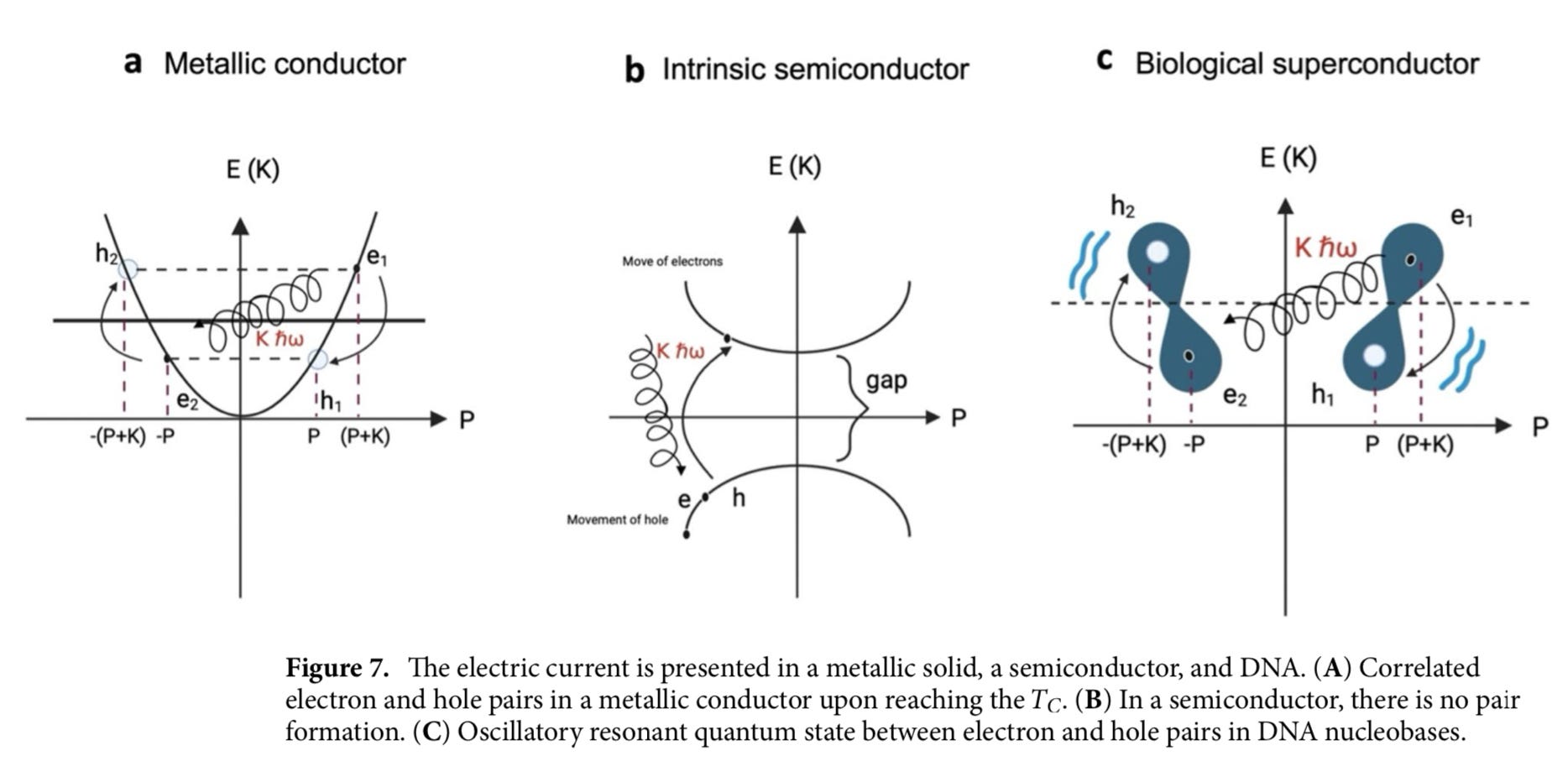
Another paper published recently explored the quantum effects of hydrogen bonding on DNA pairs8, and came to the conclusion that, “God created the most perfect quantum computer: the DNA.”
While there are many researchers investigating the potential quantum interactions between biology and electromagnetic frequencies9, we still have many questions to answer.
This all gives hope for new, less invasive solutions to modern illnesses, many of which may involve either adding beneficial wavelengths of electromagnetic radiation, or removing harmful ones.
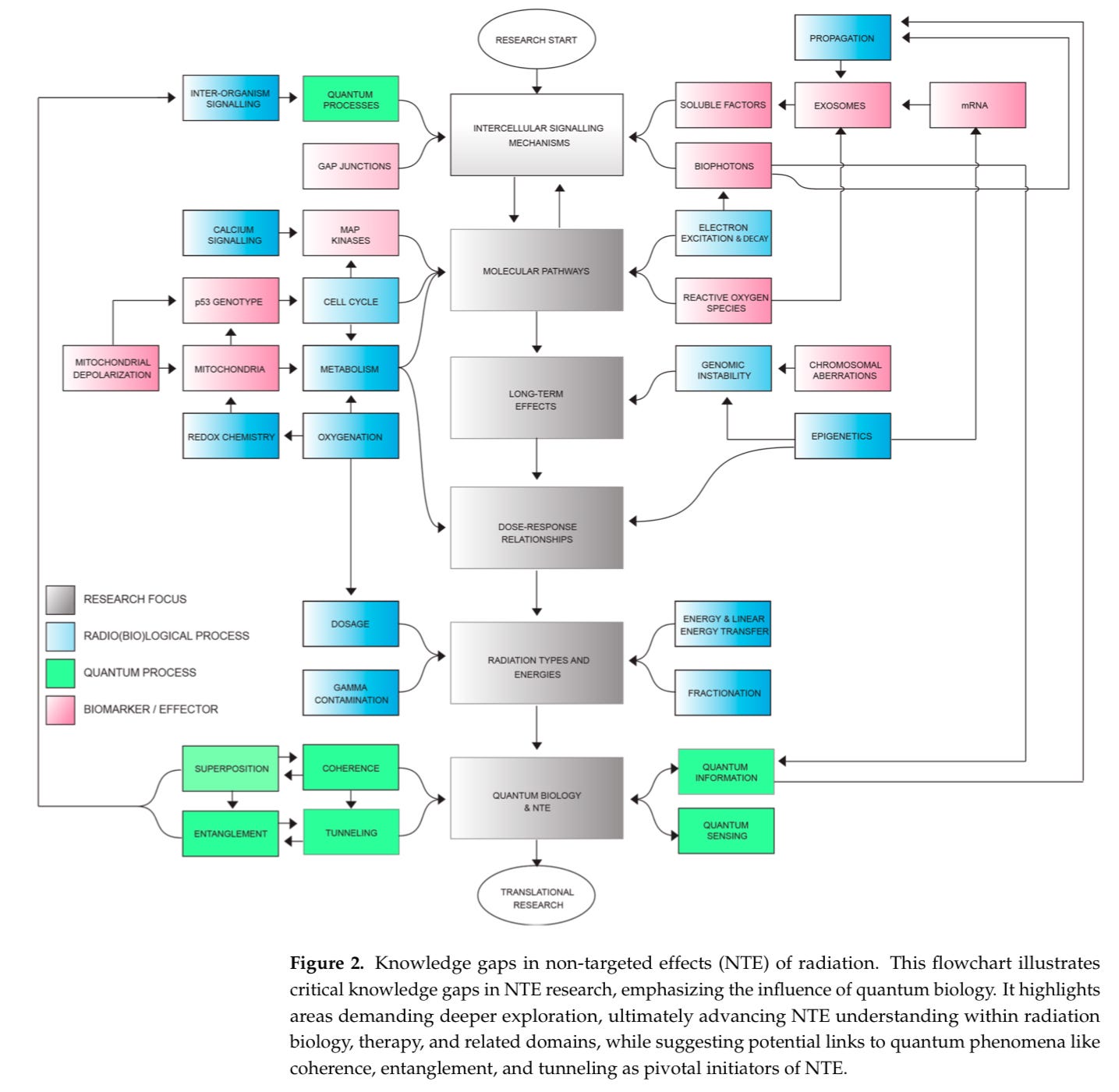
Meanwhile, the fields of biology and engineering are beginning to merge in powerful ways, as this field is inherently multidisciplinary10.
Given all of these real, physical processes and technological advances, I sometimes feel a little frustrated when people toss the word quantum around willy nilly.
What quantum is not
Let us begin our definition of quantum biology by stating what it is not: It is not a grab bag for all biological phenomena that lack a full quantitative understanding at present11.
Scholes et al (2026)
Quantum is NOT just a way to say everything about life we don’t otherwise understand, or mind over matter, or that everything “woo” is necessarily true at a quantum scale.
Yes, all the “woo” things people sometimes call quantum do matter and in time, we may even find quantum dynamics at play.
But what I want to say here is that just because people use more colloquial meanings does not invalidate the science of quantum or dilute its implications.
See → What do you mean when you say quantum?
My current take on quantum biology
My current read on the state of quantum biology is that it is most exciting in terms of not only better health, but also future technology that is more harmonious with our biology so we don’t accidentally screw up our health just by living our normal daily lives.
See → From circadian to quantum
Wouldn’t it be great to improve our technology, and our health, too?
For those of us working in this emerging field, we have much pressure to be careful and correct in our language and interpretations of research to not overstate our claims and further dampen the field’s reputation in the eyes of the public.
See → Quick research training and Translational medicine vs p-hacking
This is why I am part of creating the new Quantum Biology Collective Substack, the Applied Quantum Biology Research Accelerator, and the Journal of Applied Quantum Biology.
Final thoughts on quantum biology in 2026:
OF COURSE, I can’t wrap this without saying… one of the other more fun and lighthearted things about quantum biology is it helps explain why it always feels soooooo good to stand barefoot on the Earth and get the long rays of sunlight on your face.
AQB Updates from Nikko
Please donate to the launch of the Journal of Applied Quantum Biology if you can!
The second round of the IAQB pilot research program is opening soon. Schedule a clarity call with me if you are a practitioner who is using light therapy or circadian rhythm coaching in your practice and you want to publish your results. You don’t have to be part of a University or have an IRB to do the kind of research we are teaching. Learn more and enroll here.
The IAQB certification waitlist is open for the next round of certification which will take place in 2027, but in the meantime, you may benefit from joining our professional association for quantum-informed practitioners (AQB Pro). Learn more and join AQB Pro here.
I am offering a live training on August 6th for anyone who is tired of having their citations spread across zillions of browser tabs, bookmarks, and unnamed downloads who wants to have their research citations neatly organized for easy search and one-click citations instead. Purchase a ticket here. It comes with access to my own private Zotero library with 1300+ citations I have personally curated to get you started.
Nevoit, G., Landauskas, M., McCarty, R., Bumblyte, I. A., Potyazhenko, M., Taletaviciene, G., Jarusevicius, G., & Vainoras, A. (2025). Schumann Resonances and the Human Body: Questions About Interactions, Problems and Prospects. Applied Sciences, 15(1), 449. https://doi.org/10.3390/app15010449
Seebacher, F., & Little, A. G. (2024). Thyroid hormone links environmental signals to DNA methylation. Philosophical transactions of the Royal Society of London. Series B, Biological sciences, 379(1898), 20220506. https://doi.org/10.1098/rstb.2022.0506
Siebert, R., Ammerpohl, O., Rossini, M., Herb, D., Rau, S., Plenio, M. B., Jelezko, F., & Ankerhold, J. (2023). A quantum physics layer of epigenetics: A hypothesis deduced from charge transfer and chirality-induced spin selectivity of DNA. Clinical Epigenetics, 15(1). https://doi.org/10.1186/s13148-023-01560-3
Bisiani, Joseph, Adith Anugu, and Srinivas Pentyala. “It’s Time to Go Quantum in Medicine.” Journal of Clinical Medicine 12, no. 13 (July 5, 2023): 4506. https://doi.org/10.3390/jcm12134506.
Flór, M., Wilkins, D. M., de la Puente, M., Laage, D., Cassone, G., Hassanali, A., & Roke, S. (2024). Dissecting the hydrogen bond network of water: Charge transfer and nuclear quantum effects. Science (New York, N.Y.), 386(6726), eads4369. https://doi.org/10.1126/science.ads4369
Meessen, A. (2018). Water Memory Due to Chains of Nano-Pearls. Journal of Modern Physics, 09(14), 2657–2724. https://doi.org/10.4236/jmp.2018.914165
Sung, J., & Cheong, J. (2026). Quantum medicine: A quantum–mechanical framework for redox biology, disease and precision medicine. Clinical and Translational Medicine, 16(1), e70598. https://doi.org/10.1002/ctm2.70598
Riera Aroche, R., Ortiz García, Y. M., Martínez Arellano, M. A., & Riera Leal, A. (2024). DNA as a perfect quantum computer based on the quantum physics principles. Scientific Reports, 14(1). https://doi.org/10.1038/s41598-024-62539-5
Matarèse, B. F. E., Rusin, A., Seymour, C., & Mothersill, C. (2023). Quantum Biology and the Potential Role of Entanglement and Tunneling in Non-Targeted Effects of Ionizing Radiation: A Review and Proposed Model. International journal of molecular sciences, 24(22), 16464. https://doi.org/10.3390/ijms242216464
Gassab, L., Adams, B., Hossen, Y. H. G., et al (2026). Quantum in Biology, Quantum for Biology, and Biology for Quantum: Mapping the Evidence and the Road Ahead. https://doi.org/10.48550/ARXIV.2605.00205
Scholes, G. D., & Fleming, G. R. (2026). What is quantum biology? Proceedings of the National Academy of Sciences, 123(14), e2531134123. https://doi.org/10.1073/pnas.2531134123
 |
|