

Close child spacing - what I would do
Child spacing + breastfeeding + cycle regulation + metabolic thresholds for fertility

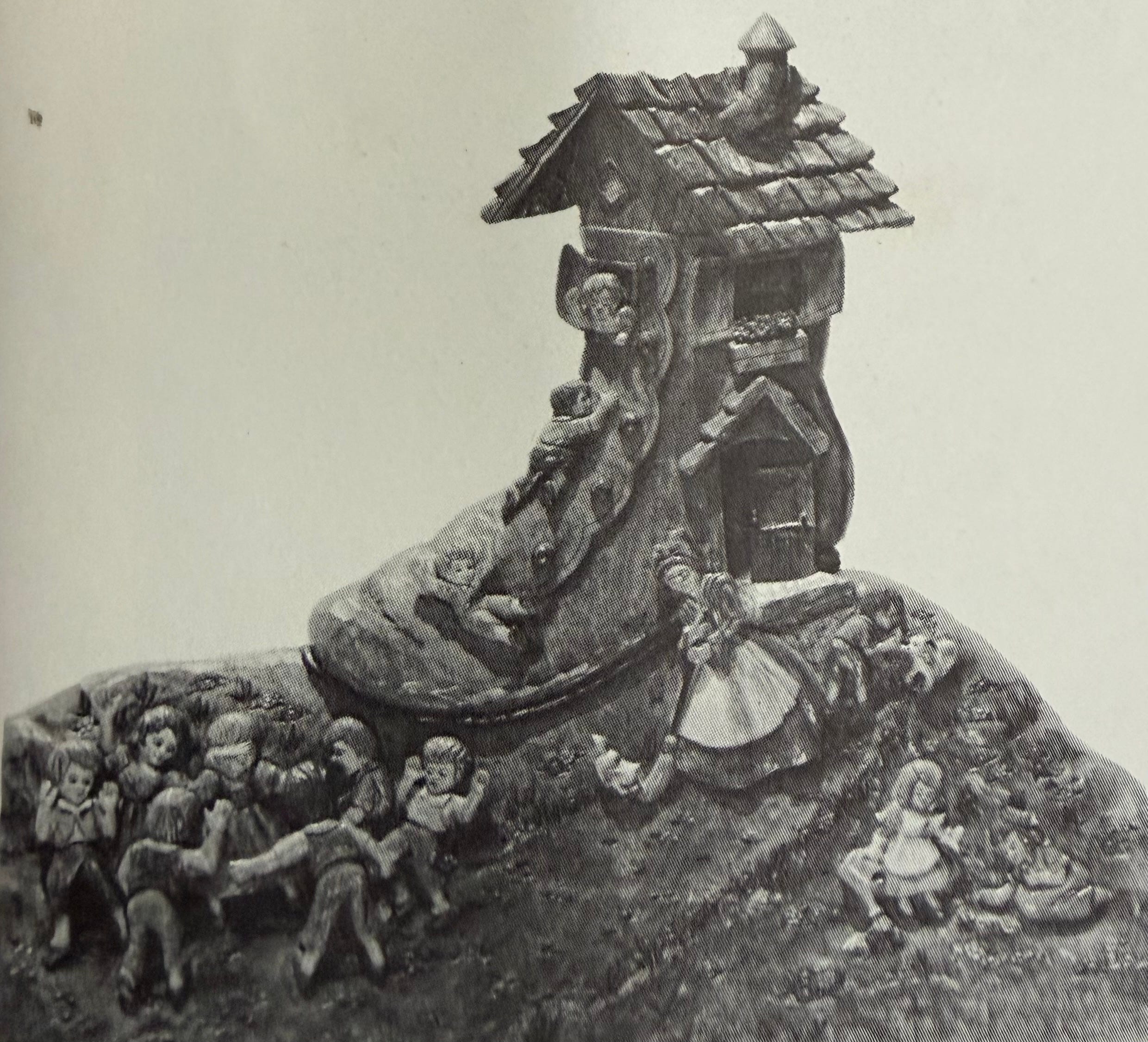
There was an old woman who lived in a shoe.
She had so many children, she didn’t know what to do.
She gave them some broth without any bread
And whipped them all soundly and put them to bed.
~Traditional nursery rhyme
As a birth professional, I was taught to parrot the statistic that outcomes are best with a minimum of 18 months from birth to the subsequent conception1.
Many now take it further to say that 3-4 years between is the gold standard.
A question I have always had: how much better are outcomes.
Because I’ve seen both:
The super closely spaced family where the children are born premature, sickly, need glasses and frequent medical interventions, whine incessantly and mother and children alike generally seem shortchanged.
ie, what Weston A Price described in Nutrition and Physical Degeneration.
(for what it’s worth, I’ve also seen families with long child spacing also have this pattern)
And, I’ve seen families with close child spacing where the children are robust, well mannered, and the family as a whole seems well-adjusted and quite energetic.
Something deeply important to me is I can see—and have experienced myself—the negative impact of the social stigma on women with shorter between pregnancy timelines.
The social burden on the mother happens before her next baby has even arrived, before she even feels morning sickness, sometimes internally before she even announces her pregnancy.
These social pressures generally fall under:
Shame, blame, accusations (from self or other) of being irresponsible or stupid, and even go as far as suggestions that she should abort.
I’m not about all of that.
My way is to offer help where help can be received.
What I want to bring to the discourse around child spacing today are the practical steps I recommend for a woman (you or someone you know) who:
has fertility that comes back super fast
has had one or more surprise pregnancies
wants to feel calm, trusting, and empowered to follow through even if she feels unprepared for another pregnancy
and/or who wants to change the way she supports herself so that she may have a naturally longer between-pregnancy timeline in the future
and who doesn’t want to rely on hormonal birth control, implants, nit-picky cycle tracking that goes against her body’s desires (especially if she has tried all of these and they haven’t worked), industrially produced barrier methods2, or permanent surgical sterilization for herself or her spouse
I’m not here to say anyone should try to have super close child spacing, but to bring a practical lens to what are we doing about this, as it is happening at present?
My read of the research as well as my personal experience as mother and doula since 2011:
Healthy babies can be born with any level of child spacing.
Close child spacing doesn’t guarantee a poor outcome.
A longer age gap doesn’t guarantee a better outcome.
There are things a mother with any level of child spacing can do to improve her experience and reduce the risk of adverse outcomes for herself and her baby.
Let’s dive in!
The topic of child spacing begins with lactational amenorrhea, or the time from birth until fertility and menstruation (if no conception happens) return. This is sometimes abbreviated ROF.
If you read ecological breastfeeding literature, you may be under the impression that all you have to do to keep your fertility away is breastfeed on demand and in a particular way.
All you need to do to dispel the universality of that framework is talk to women.
For example, at the time of writing, I’ve collectively had over 100 women chime in to share their between-spacing stories.
Cruise through these two threads and you will immediately see the great diversity of the experience.
To the many women who exclusively breastfed, and even try to follow the rules of ecological breastfeeding, and yet get their cycle within weeks of giving birth, this can feel like a betrayal!
Why does this happen?
As Dr. Suuzi of Mother’s Best Liver Pills, a Doctor of Traditional Chinese Medicine (TCM) shared with us, “I honestly think there are too many factors to parse apart to make any broad brush strokes (from a TCM point of view).”
And Musings of a WiseWoman, another very experienced and very smart provider, shared “I haven’t figured a pattern out to this yet, but still observing. Will report back one day maybe with an insight!”
Some general trends among the comments from women were around maternal age, breastfeeding patterns—particularly frequency and timing of nighttime nursing, nutrition patterns (mixed reports), body type (mixed reports from Ayurvedic insights around Kapha imbalance, body fat composition, Qi energy from TCM), and, of course, family patterns.
In my research coming in from the peer-reviewed literature side, there also remains a lot of uncertainty, just as reported by the women’s observations.
The biggest general trend I can parse:
Metabolic load (or in other words, does the woman have an energetic surplus or deficit3), combined with the individual genetic threshold at which a woman’s body believes it has enough energetic surplus for another pregnancy.
When a woman has a high metabolic threshold, her cycle takes a long time to come back.
For a woman with a high threshold, she may be trying to figure out what she can do at two years or more postpartum to bring her cycle back so she can conceive.
This is a pattern I am increasingly seeing among women who started their families late in their potential childbearing years and feel a sense of urgency about if they will have enough time to have one or two more.
I shared about my recommendations for deliberately bringing fertility back in my first post about lactational amenorrhea, which is really Part 1 of the post you are reading now —> Do you have to wean to conceive?
In that one, I shared about the difference between circadian prolactin and breastfeeding prolactin.
In today’s post, I’m more focused on the other end—the woman whose body turns fertility back on at a very low metabolic threshold.
This woman does everything she has heard to do to not get her fertility back, and she still gets pregnant sooner than she wanted to.
This can even be in spite of things that in other woman would absolutely down regulate fertility: low stored minerals especially iron, recent childbirth, exclusive breastfeeding, co-sleeping, baby wearing, being either extremely lean or carrying a lot of excess body fat (in both cases, often low relative muscle mass), and even living in relative poverty or otherwise highly stressful situations. I’ve also known women who have had this happen in spite of using condoms, IUD’s and hormonal birth control.
Because her body is willing to conceive at a relatively low metabolic threshold, she is going into that pregnancy with much lower reserves than a woman with a higher metabolic set point.
This situation is what people fear.
She doesn’t seem—from the outside—to have the strength or vitality needed for a healthy, happy pregnancy.
Rather than heaping her with shame and blame, my work here is instead to encourage rallying and support for her sake, and her baby’s.
Rally for this mother who became pregnant again so fast! Bring her nutrition, support, congratulations, encouragement, and love.
Lend her the calm of your nervous system, the work of your hands, the wealth from your stores.
She needs you!
She needs extra nutrition beyond someone with whose fertility stays suppressed until a much higher metabolic threshold.
The Brewer diet for pregnancy suggests 20g protein and 200 calories extra for close child spacing.
If she’s still breastfeeding her earlier baby, add another 20g and 200 calories for pregnant while breastfeeding.
If she’s also in a stressful home or work situation, add yet another 20g protein and 200 calories.
This is all on top of the baseline servings of protein and food all pregnant women need to sustain a healthy pregnancy.
And this volume is really tricky to achieve without creating conditions of excess and the cellular stress of overeating, which is another danger.
Personalized support from a nutritional therapist might be helpful here, as the nutritional guidance may need to be tailored depending on if she is on the too skinny side or the too fat side and depending upon which potential nutritional deficiencies she may be close to.
And in either case, if she is in the habit of eating processed food and isn’t handy with cooking from scratch, it will be much more difficult on top of an already difficult situation for her to meet her nutritional needs without inducing metabolic chaos from overfeeding.
So what can you do? Bring well-prepared + easy to eat + nutrient dense foods to her! She needs them. Her other child/ren also need them (especially if she is going to make the decision to wean instead of tandem nurse).
Support for tandem nursing in the archive, if that instead is her decision, can be found here —> Nikko’s tips for tandem nursing
Social support is also absolutely necessary for a woman with close child spacing! Too many women are lacking it; social support from competent adults is where her social resilience is built.
If you do nothing more than call her on the phone and say her name in a kind and loving way and tell her you believe in her… This is care, and fills up her social bucket so she herself can have more to give to her other child/ren who need her.
Here are my top 8 daily elements of trauma-informed (self)care —> Daily rituals to boost resilience
Wealth also plays a big part, and women who are in the close child spacing cycle who lack home and nutritional security are at increased risk of all the scary things we worry about with regard to close child spacing.
In fact, all research into pregnancy of any kind shows outcomes are negatively affected by poverty regardless of child spacing.
Unsurprisingly, several studies have now shown that cash payments delivered during pregnancy can improve maternal mental health scores456.
So there you have my main three recommendations for how to support a mother with close child spacing:
✔️ Feed her
✔️ Love her
✔️ Give her cash (or goods in kind) that will make her feel wealthier
The next post in this series should cover things that could potentially prolong the stage of lactational amenorrhea so that longer child spacing may arise naturally for those who want it.
The steps I will share also very similar to the steps you might take if you wanted to increase your milk supply and reduce breastfeeding aversion/dysphoric letdown, which I paraphrased in here:
Thank you for reading! For personal support, enroll in Virtual Doula Care. I support women at any stage of the childbearing journey, from preconception through postpartum.
Ni, W., Gao, X., Su, X., Cai, J., Zhang, S., Zheng, L., Liu, J., Feng, Y., Chen, S., Ma, J., Cao, W., & Zeng, F. (2023). Birth spacing and risk of adverse pregnancy and birth outcomes: A systematic review and dose–response meta‐analysis. Acta Obstetricia et Gynecologica Scandinavica, 102(12), 1618–1633. https://doi.org/10.1111/aogs.14648
Jawjit, W., Pavasant, P., Kroeze, C., & Tuffrey, J. (2021). Evaluation of the potential environmental impacts of condom production in Thailand. Journal of Integrative Environmental Sciences, 18(1), 89–114. https://doi.org/10.1080/1943815X.2021.1949354
Valeggia, C., & Ellison, P. T. (2004). Lactational amenorrhoea in well-nourished Toba women of Formosa, Argentina. Journal of biosocial science, 36(5), 573–595. https://doi.org/10.1017/s0021932003006382
Okeke, E. N. (2021). Money and my mind: Maternal cash transfers and mental health. Health Economics, 30(11), 2879–2904. https://doi.org/10.1002/hec.4398
Hanna, M., Shaefer, H. L., Finegood, E., Agarwal, S., Zamani-Hank, Y., & LaChance, J. (2025). Hardship and Hope: The Relationship Between Unconditional Prenatal and Infant Cash Transfers, Economic Stability, and Maternal Mental Health and Well-Being. American Journal of Public Health, 115(12), 2020–2029. https://doi.org/10.2105/AJPH.2025.308244
Powell-Jackson, T., Pereira, S. K., Dutt, V., Tougher, S., Haldar, K., & Kumar, P. (2016). Cash transfers, maternal depression and emotional well-being: Quasi-experimental evidence from India’s Janani Suraksha Yojana programme. Social Science & Medicine, 162, 210–218. https://doi.org/10.1016/j.socscimed.2016.06.034