

How’s baby sleeping?
My more accurate circadian developmental goal: A baby who is happily weaned and potty-independent

”and how’s baby sleeping?” “are they a good sleeper?”
Sleep is the daily rhythm it seems most people are most concerned about in regard to a new baby.
Just how many times as a new mom do you get asked about baby’s sleep?
But how little do we actually understand the development of sleep patterns, especially in the context of the greater bucket of circadian health?
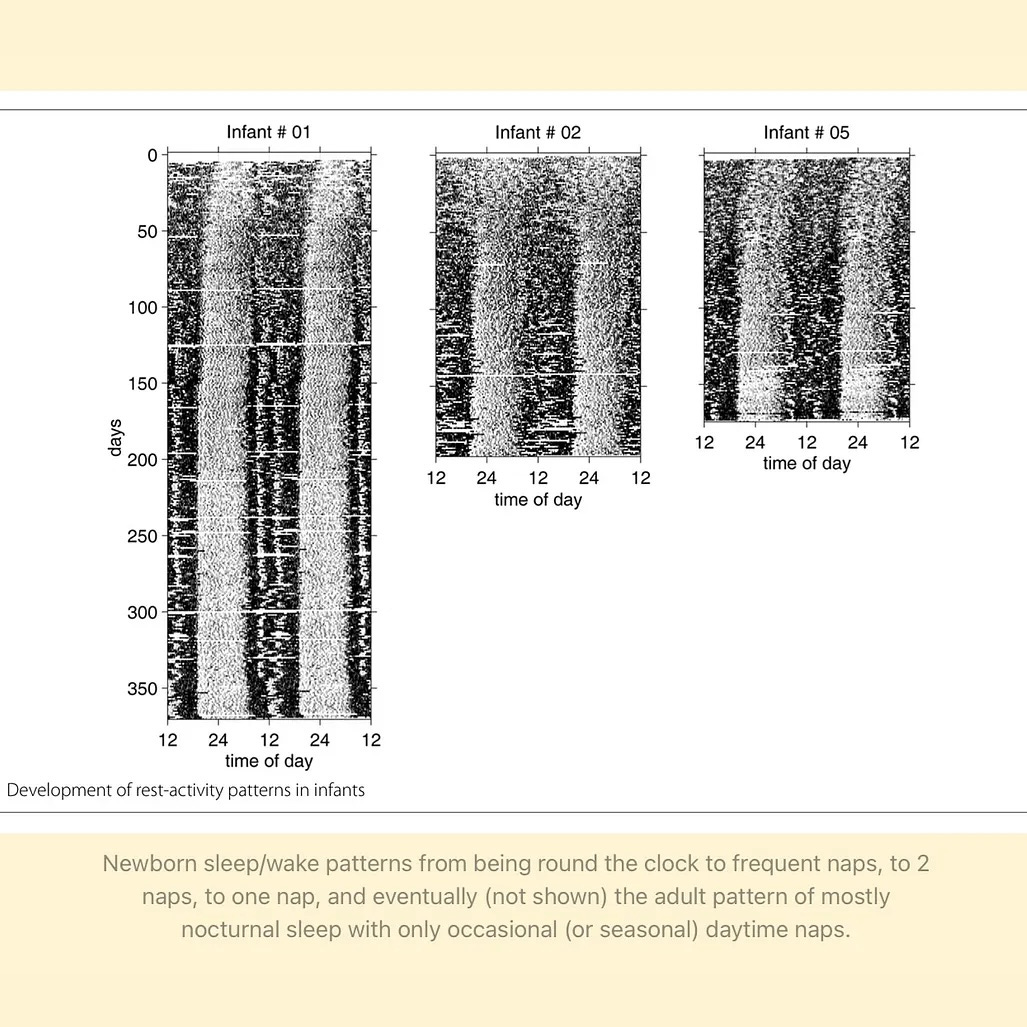
Sleep is the most well-known output of the circadian rhythm, but it’s not the only one!
Babies are born with immature circadian rhythms, and it takes about 2-3 years for their rhythm to fully mature.
Here are the most important stages of circadian development in a baby:
Body temperature rhythm (warmer in the day, cooler at night)
Melatonin rhythm (higher in the day, lower at night)
Sleep rhythm (consolidating toward the natural darkness)
Digestion rhythm (consolidating toward the natural daylight)
In my own understanding, early childhood circadian health can much more easily be assessed by understanding digestive rhythms, because they a…
